Torre Julia de Jacopo

TOWER JULIA DE JACOPO

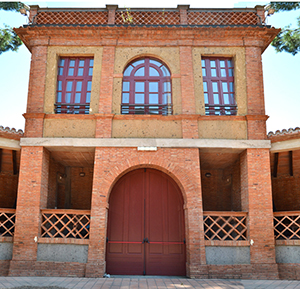
Currently the tower, the ancient gateway to the city of Acquapendente, houses the Visitor Center of the Municipality of Acquapendente and the Monte Rufeno Nature Reserve. A welcome point for tourists: inside it you can receive, from qualified personnel, all the information of a receptive, playful and didactic nature, useful for spending pleasant days in Acquapendente or in the immediate vicinity. It is also possible to book educational activities and extraordinary openings of the Museums. It is possible to receive information on products and places (wineries, oil mills, etc.) for food and wine tourism. You will also find information material, such as guides and maps, to organize your stay independently.

TORRE DEL BARBAROSSA

BARBAROSSA TOWER

According to tradition, the tower is nothing more than the last part of the building of the ancient castle of Frederick Barbarossa still in situ erected in the highest part of the town, where its governor Guelph VI was stationed. The rebellion of the Acquesians from the oppression of Barbarossa led to the destruction of the castle in 1166.

Anfiteatro Cordeschi

CORDESCHI AMPHITHEATER

Currently the Amphitheater is managed through an agreement with the Municipality of Acquapendente by the Teatro Boni Association. the Amphitheater is by vocation a theater that hosts festivals and events in the summer season, and is the place where the activity of the TeBo Association moves in the summer months.

TEATRO BONI

BONI THEATER

Currently the Theater is the seat of the Teatro Boni Association which, through an agreement with the Municipality of Acquapendente, organizes theatrical seasons, Cineclubs, and other cultural initiatives related to live entertainment. The structure also houses a Theater Café open only for shows and within which it is possible to program cultural meetings or consult books and multimedia material relating to the activities carried out and the many forms of live entertainment.

Porta San Leonardo

GATE OF SAN LEONARDO

We have news about its existence already at the end of the twelfth century, in the award of the Sienese consuls Iacopo “Arungerius” and Altovito who on 8 November 1198 pronounced themselves in the dispute between Orvieto and Acquapendente on the demolition of the walls.

Porta della Ripa

DOOR OF THE RIPA

The name of the gate is not mentioned in the award of the Sienese consuls Iacopo “Arungerius” and Altovito who on 8 November 1198 pronounced themselves in the controversy between Orvieto and Acquapendente on the demolition of the walls, after the war of 1197. Only in the 16th century, Paolo Biondi , describing the six gates of the city, he remembers that the one you enter when you come towards Siena is called Ripa.

Palazzo Vescovile

THE EPISCOPAL PALACE (Palazzo Vescovile)

With the destruction of the city of Castro and the erection of the new diocese of Acquapendente, the city became a bishopric and the bull of November 13, 1649 of Innocent X made its constitution official. The community, with the help of the brotherhoods, bought and offered the bishop the palace of the Oliva family. On the first floor there is the historical archive of the Dioceses of Castro and Acquapendente.

Palazzo Comunale

MUNICIPAL BUILDING (Palazzo Comunale)

The current appearance of the Acquapendente municipal building is due to the works completed in 1884 by the Viterbo builder Grandori under the direction of the architect Guglielmo Meluzzi. We have a drawing of the previous structure of the town hall by the architect Guglielmo Meluzzi himself in 1873.

Palazzo Viscontini

VISCONTINI PALACE

The building was commissioned by Monsignor Antonio Viscontini, who entrusted the project to the architects Ippolito Scalza of Orvieto and Taurello Taurelli Salimbeni of Acquapendente. Today the building is private property.