Card Author:
Location:
Date:
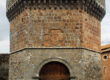
According to tradition, the tower is nothing more than the last part of the building of the ancient castle of Frederick Barbarossa still in situ erected in the highest part of the town, where its governor Guelph VI was stationed. The rebellion of the Acquesians from the oppression of Barbarossa led to the destruction of the castle in 1166.
Info: Toll-free number: 800-411834


BARBAROSSA TOWER
HISTORY AND DESCRIPTION
According to tradition, the tower is nothing more than the last part of the building of the ancient castle of Frederick Barbarossa still in situ erected in the highest part of the town, where its governor Guelph VI was stationed. The rebellion of the Acquesians from the oppression of Barbarossa led to the destruction of the castle in 1166. Every year in Acquapendente, on the third Sunday of May the event is commemorated through the feast of the Pugnaloni. The tower, locally called l, Orologine, appears since the first print of the city (1572) right on top of the hill overlooking the town on the left while it is absent from the bird’s eye print by Guicciardi (1582) and then reappears with lots of of clock in the re-edition of De Rossi (1686). The Clock that already existed in 1588 as noted by the local historian PP Biondi “the four hills that are included wonder, one of the Oriolo, because of the orilogio that is there, but in ancient times it was called the emperor’s castle, because there the emperor already lived, who was the master of that land ”. The current shape of the tower is due to the nineteenth century renovations that added the belfry and the battlements. The park that develops all around the tower was formed after the Second World War after having been cultivated as a vegetable garden, arable land and vineyards by various owners including the friars of San Francesco and San Agostino throughout the nineteenth century. brotherhood of the Good Death, of the Holy Sacrament and other entities and private citizens. The tree species present are mainly domestic and maritime pine, with numerous cypresses, horse chestnuts and cedars of Lebanon; it is not unusual to see squirrels on the tree-lined peaks and it is the most suitable place to admire views of the town. A sports course has recently been set up in the park, ideal for those who want to keep fit outdoors without too much trouble.
ESSENTIAL BIBLIOGRAPHY
AA.VV. Acquapendente e il suo territorio. Regione Lazio, Assessorato alla Cultura, Spettacolo, Sport e Turismo. Direzione regionale cultura, sport e turismo, area valorizzazione del territorio e del patrimonio culturale. Avellino 2004.
Biondi P., Le origini del comune di Acquapendente e la Madonna del Fiore, Acquapendente 1966;
Costantini N., Memorie storiche di Acquapendente, Acquapendente 1982;
Lise G., Acquapendente. Storia. Arte. Figure. Tradizioni, Acquapendente 1971.
Rossi M., Cenni storici di Acquapendente. Viterbo 1989.
Pietro Paolo Biondi, Le Croniche di Acquapendente. Descrizione della terra d’Acquapendente con la sua antiquità, nobiltà, governo, usanze ed altre cose (ed. a stampa del manoscritto ddl 1588) Acquapendente 1984.
Costantini N., Memorie storiche di Acquapendente. Acquapendente 1982.
Chiovelli R., Dalle rovine della guerra di Castro alla rinascita settecentesca, in Chiovelli R. Mengalli M. A. L., Guglielmo Melluzzi architetto di Acquapendente post unitaria. Acquapendente 2003.
Acquapendente città d’arte, Torre dell’orologio o del Barbarossa.