Card Author:
Location:
Date:


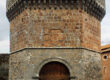
The City Museum constitutes a real integrated city museum system consisting of three exhibition venues. The headquarters are located in the halls of the Bishop’s Palace, built in 1649. Here you can admire the collections of diocesan sacred art and the numerous ceramic finds, which illustrate the history of Aquesian ceramics from the Middle Ages to the present day.
Contacts and visiting hours
January (excluding New Year’s Eve) – March: Saturday, Sunday, holidays and days before holidays: 10-13 / 15-18
April – July: from Friday to Sunday, holidays and days before holidays: 10-13 / 15-19
August: from Wednesday to Sunday, holidays and days before holidays: 10-13 / 15-19
September: from Friday to Sunday, holidays and days before holidays: 11 am-7pm
October: from Friday to Sunday, holidays and days before holidays: 10-13 / 15-19
November and December: (excluding Christmas): Saturdays, Sundays, holidays and days before holidays: 10-13 / 15-19
The Queen Bee
for educational activities and guided tours: Tel. 0763/730246 – 0763/730065 – coop.laperegina@gmail.com
Information and booking for Events: Tel 3888568841 eventi@laperegina.it
Acquapendente Municipality Culture Office: Tel 0763 7309205


CIVIC AND DIOCESAN MUSEUM OF ACQUAPENDENTE - PALAZZO VESCOVILE - Historical Ceramics Sections
HISTORY AND DESCRIPTION
The City Museum constitutes a real integrated city museum system with its three exhibition venues all located along the road axis that coincides with the urban crossing of the Via Francigena, still today the backbone of the urban layout of the historic center. The headquarters are located in the large rooms of the Bishop’s Palace, built following the establishment of the new diocese of Acquapendente in 1649. Here it is possible to admire the collections of sacred diocesan art from the cathedral and other churches of Acquapendente and numerous ceramic finds, coming from local excavations, which illustrate the history of Aquesian ceramics from the Middle Ages to the present day. The diocesan collection consists of a heterogeneous collection of works – painted on canvas and table, liturgical vestments, furnishings – in which the marble bust of Innocent X, the work of the seventeenth-century sculptor Alessandro Algardi, the lunette with the dead Christ among angels (1505 ca.) work by Girolamo di Benvenuto and the frontal of bishop Alessandro Fedeli (1690-1696) finely embroidered in spun silver. The civic collection consists of a rich collection of ceramic finds, the result of an intense excavation activity focused on the Aquesian territory, distributed chronologically over a period of time ranging from the late Middle Ages to the twentieth century as evidence of an uninterrupted production activity for centuries. . The new section dedicated to the Via Francigena, on the second floor of the Bishop’s Palace, aims to analyze the Via Francigena with particular regard to the road section leading to the Viterbo Tuscia from Tuscany, which for centuries constituted the access to the Papal State. The new section is rendered through multimedia and plastic didactic equipment reproducing the Via Francigena through the various regions of Europe with particular attention to the Lazio stretch and the urban crossing of Acquapendente influenced, since the Middle Ages, by this important medieval artery, both as border point, both defensive and control.
ESSENTIAL BIBLIOGRAPHY
Agostini, Le chiese di Acquapendente, Acquapendente 1987;
Biondi P., Le origini del comune di Acquapendente e la Madonna del Fiore, Acquapendente 1966;
Costantini N., Memorie storiche di Acquapendente, Acquapendente 1982;
Lise G., Acquapendente. Storia. Arte. Figure. Tradizioni, Acquapendente 1971.